%2Ffit-in%2F250x250%2Fusers%2F81b10169-d6da-4535-b20d-a508d6758d05%2Fimages%2F063ab942-c5e7-4a82-9bbb-e2809af47ecf.jpg&w=1920&q=100)
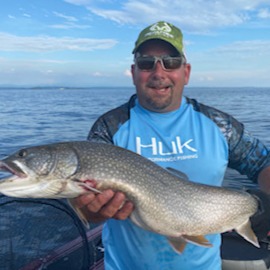
Lake Trout Caught on Lake Champlain in Cumberland Head
Lake Trout Fishing in Cumberland Head - What to Expect
%2F%2Fusers%2F81b10169-d6da-4535-b20d-a508d6758d05%2Fimages%2Flake-trout-cumberland-head-catch-2552.jpg&w=1920&q=75)
Fishing Charter by Captain Scott Thurber in June
- Fish and Hunt in Lake Champlain and Adirondacks


Summary
Experience expert lake trout fishing on a guided charter with Captain Scott Thurber of Irish Raider Outfitters on Sunday, June 8th. Lake Champlain offers prime conditions for landing quality lake trout throughout the season. This fishing charter combines local knowledge with proven techniques to maximize your success on the water.
Fishing Charter with Captain Scott Thurber - Rates & Booking
Captain Scott Thurber of Irish Raider Outfitters LLC operates guided fishing charters on Lake Champlain near Cumberland Head, NY on Sunday, June 8th. This fishing charter delivers hands-on instruction and proven tactics for pursuing lake trout in one of the Northeast's premier cold-water fisheries. Captain Thurber's local expertise ensures you target productive areas and learn techniques that translate to future success.
Ready to book your charter? Contact Irish Raider Outfitters LLC directly to reserve your date, confirm group size, and discuss any gear or licensing requirements. Captain Thurber handles the details so you can focus on the fishing experience.
Highlights of Lake Trout Fishing on Lake Champlain
Lake Champlain is known for healthy lake trout populations that respond well to guided presentations. The deep, cold waters maintain ideal conditions for this species throughout the year. A guided charter with Captain Thurber puts you on proven fishing grounds where lake trout congregate, increasing your chances of solid catches.
Success on Lake Champlain requires understanding seasonal patterns and water structure. Captain Thurber reads the conditions and adjusts tactics accordingly, whether fishing deep drop-offs, mid-water columns, or structure-related holding areas. His experience ensures you're fishing effectively rather than simply putting in time on the water.
Local Species Insights: Lake Trout
Lake trout thrive in deep, cold freshwater environments like Lake Champlain. These fish prefer water temperatures between 50-60 degrees Fahrenheit and typically hold in deeper zones during warmer months. They are ambush predators that respond to movement and vibration, making them excellent targets for active fishing techniques.
Lake trout exhibit fascinating behavior patterns based on seasonal conditions. During spring and early summer, they often move toward moderate depths where light penetration and food availability create ideal feeding zones. They feed on smaller fish species and respond to both live presentations and jigging techniques. Understanding their habitat preferences helps guide your fishing strategy.
These fish grow at a measured pace and can live for decades, making them prized by anglers seeking quality experiences over rapid catch-and-release sessions. Lake Champlain's population supports consistent fishing pressure while maintaining healthy fish stocks. Fishing with Captain Thurber means learning to identify and target larger, more selective fish that reward patience and technique.
Lake trout fishing requires attention to detail. Successful anglers match their approach to current conditions, adjust presentations based on fish response, and maintain focus throughout the day. Working with an experienced guide accelerates your learning curve and produces results faster than trial-and-error fishing.
Plan Your Fishing Day
A guided fishing charter with Captain Thurber focuses on maximizing your time on productive water. Expect hands-on instruction in reading conditions, selecting presentations, and detecting strikes. The charter operates from Cumberland Head with direct access to Lake Champlain's best lake trout habitat. Dress for variable weather conditions and bring comfort items like sunscreen and water. Captain Thurber manages the vessel operation and fishing logistics so you concentrate on the experience.
Fishing in Lake Champlain: Lake Trout
Lake Trout Overview
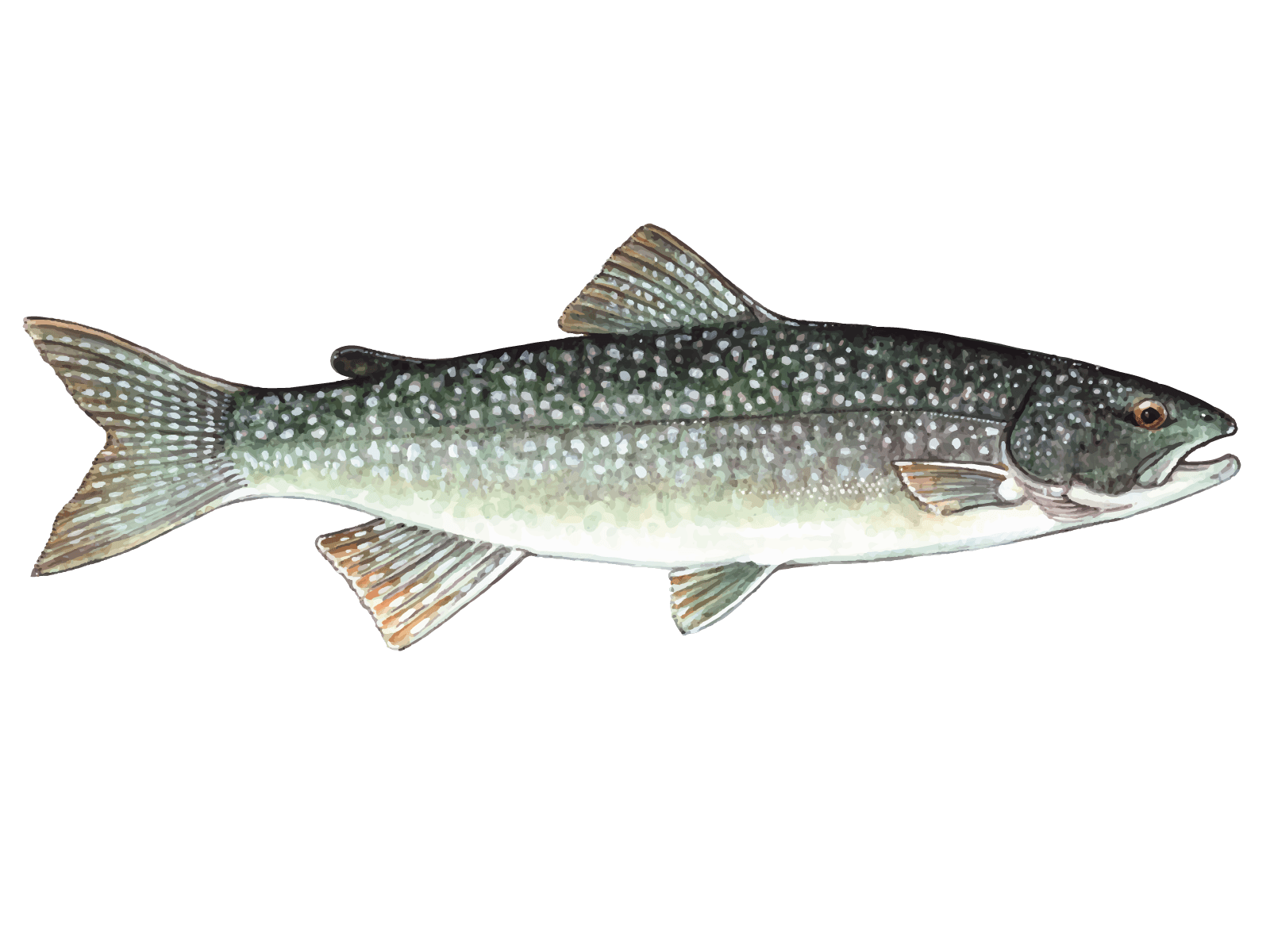
The Lake Trout (Salvelinus namaycush) is the largest member of the char family within the Salmonidae family and Salmoniformes order. These remarkable cold-water fish are distinguished by their grey to green coloring, lighter belly, and striking yellow to cream-colored markings across their body and fins. Lake trout are legendary among anglers for their challenging pursuit in deep, pristine waters and are the only major native game fish to inhabit the deep, cold waters of oligotrophic lakes in northern regions. What makes these fish particularly fascinating is their slow growth rate, late maturation, and notably low reproductive potential compared to other popular game fish species—qualities that make sustainable fishing practices especially important.
Lake Trout Habitat and Distribution
Lake trout are true specialists of cold-water environments and depend critically on high levels of oxygenation to thrive. These fish have a relatively narrow geographic distribution compared to other trout species, though their range is expanding through human introduction. Naturally, they're found throughout the northern reaches of North America, including the Great Lakes region, across Canada, parts of Alaska, and to a lesser extent the northeastern United States. In recent decades, lake trout have been artificially stocked in Europe—particularly in Scandinavian countries like Sweden—as well as in New Zealand, South America, and parts of Asia. Within their native lakes, these fish typically suspend themselves in the middle of the basin at considerable depths, where water temperatures and oxygen levels suit their demanding requirements. During summer months, lake trout in the southern portions of their range retreat to even deeper water where cooler temperatures persist.
Lake Trout Size and Weight
Lake trout are impressive fish and live up to their reputation as the largest char species. Typical catches range from 15 to 40 pounds, with average lengths falling between 24 and 36 inches. Anglers pursuing these deep-water dwellers should know that truly exceptional specimens do exist—the world record for lake trout caught on rod and reel was landed at Great Bear Lake in the Northwest Territories of Canada and weighed an astounding 72 pounds with a length of 52 inches. However, fish in the 25 to 59-inch range with weights between 5 and 15 pounds represent the more commonly encountered sizes for most recreational anglers.
Lake Trout Diet and Behavior
Lake trout are carnivorous predators that feed primarily on smaller fish species and aquatic organisms available in their deep-water environments. These fish are known to be light-sensitive and actively avoid bright conditions, making their feeding behavior most pronounced during overcast days, dawn, dusk, and nighttime hours. Understanding this preference is crucial for successful angling, as lake trout generally feed more frequently when light levels are low. Their behavior is largely driven by water temperature and oxygen availability—factors that dictate where they position themselves throughout the day and across seasons. Interestingly, lake trout can hybridize with brook trout to create a sterile hybrid species called splake, which fisheries managers stock in lakes across North America to provide additional sport fishing opportunities.
Lake Trout Spawning and Seasonal Activity
Spring represents one of the most productive times for targeting lake trout, particularly immediately after ice-out when water temperatures are at their coldest. During this period, fish move to relatively shallower waters compared to their typical deep summer and fall positions, making them more accessible to anglers. As water temperatures warm throughout spring and into summer, lake trout gradually migrate deeper to find the cool, oxygen-rich water layers they require for survival. Fall fishing can also be excellent as cooling water temperatures again draw fish toward shallower zones. Understanding these seasonal movements is essential for planning a successful lake trout expedition, as the same lake can require completely different fishing strategies depending on the time of year.
Lake Trout Techniques for Observation or Capture
Jigging Method: Jigging is the preferred and most effective technique for lake trout due to their deep-water habitat. Employ jigging lures like the Rapala Jigging Rap or lures that imitate wounded baitfish, as these closely mimic the natural prey these fish hunt in the depths. Jig heads fitted with soft plastic paddle tail swimbaits, skirted jigs, and bladed jigging spoons are all excellent choices that produce consistent results. The key is maintaining vertical contact with the lake bottom and working your lure with subtle, controlled movements that trigger strikes from suspended fish.
Trolling with Crankbaits: When targeting lake trout in deeper zones or when they're positioned higher in the water column, trolling with quality crankbaits is highly effective. This method allows you to cover more water and reach the precise depths where fish are holding. Crankbaits can be trolled along deep structure, drop-offs, and basin edges to locate active fish. This technique works particularly well in spring when fish are more distributed and less confined to extreme depths.
Spoon Fishing: Don't overlook traditional spoons when pursuing lake trout. These classic lures remain remarkably effective and can be used both while jigging vertically and while trolling. Spoons are particularly valuable when you're searching for fish across different depth zones, as they're simple to deploy and retrieve while covering water efficiently. Around lakes in northern Canada and the Great Lakes region, local guides often recommend starting with spoons early in the season to establish where fish are positioned.
Lake Trout Culinary and Utilization Notes
Lake trout have earned a reputation as good eating fish with firm, flavorful flesh that appeals to many anglers. The meat has a mild to moderately rich flavor profile and holds up well to various cooking methods including baking, grilling, smoking, and pan-frying. These fish are nutritionally valuable, providing excellent sources of protein and omega-3 fatty acids beneficial for cardiovascular health. However, some regional guidelines recommend limiting consumption of larger specimens due to potential bioaccumulation of environmental contaminants in deep-water ecosystems. Always check local fishing regulations and consumption advisories before harvesting lake trout, as these guidelines vary by lake and region and are designed to ensure both personal safety and sustainable fish populations.
Lake Trout Frequently Asked Questions
Q: What is the best bait or lure for catching lake trout?
A: Jigging is the most effective method, using lures like Rapala Jigging Raps, soft plastic swimbaits on jig heads, bladed jigging spoons, or traditional spoons. These lures best mimic the baitfish and small prey that lake trout hunt in deep water. The specific choice depends on water depth, season, and current fish positioning.
Q: Where can I find lake trout in Canada and the Great Lakes?
A: Lake trout thrive in deep, cold-water lakes throughout Canada, the Great Lakes region, and northern portions of the United States. The Great Lakes themselves—particularly Lakes Michigan, Huron, and Superior—offer excellent populations. In Canada, Great Bear Lake in the Northwest Territories is world-renowned for trophy lake trout fishing. Always consult local fishing reports and regulations for specific lake recommendations in your target region.
Q: When is the best time to fish for lake trout throughout the year?
A: Spring immediately after ice-out is often considered the prime season, as fish move to shallower water in the colder temperatures. However, fall can also be excellent as water cools again. Summer fishing requires targeting deep structures and basin zones where cooler water persists. Timing within the day is equally important—fish during overcast conditions or low-light hours when lake trout feed most actively.
Q: Are lake trout safe and good to eat?
A: Yes, lake trout are considered good eating fish with firm, flavorful meat that works well in many preparations. However, it's important to check local consumption advisories, as some deep-water lakes may have recommendations limiting harvest or consumption, particularly for larger specimens that may accumulate environmental contaminants. Always follow regional guidelines before harvesting.
Q: How deep do lake trout typically stay, and does this affect fishing strategy?
A: Lake trout are deepwater specialists that typically suspend themselves in mid-basin zones and at considerable depths, especially during summer when shallower water warms. This deep habitat is why jigging vertically is the most productive technique. In spring and fall, they move shallower, making them more accessible. Depth finders and sonar are invaluable tools for identifying where fish are positioned at any given time.
Q: Can lake trout be caught in smaller lakes, or do they require massive bodies of water?
A: While lake trout are typically associated with large, deep, cold-water lakes like those in the Great Lakes and Canadian shield regions, they can exist in appropriately sized lakes that meet their specific requirements: sufficient depth, cold water year-round, and adequate oxygen levels. Not all lakes can support lake trout populations, so it's essential to research your target water body before planning a fishing trip. Local fisheries departments can provide detailed information about which lakes in your area support viable lake trout populations.